Coaches’ Blog

Ideas, ideals, and dealings from Tufts Coaches

Nationals Thoughts (Take 1) – The Athlete

Posted by on Friday, June 11th, 2010

This year was a first for me and my wife…she came to nationals.  Afterwards, she came up with the great idea of posting some of her thoughts on this site.  I thought it would be great to expand that one step further.  With that in mind, this will be a four part blog entry giving you all a different perspective on this springs national championships (athlete, coach, parent, coach’s wife).  I hope that you enjoy it.  I know I enjoyed the meet.

Our first installment is brought to you by graduating senior Jesse Faller.  Enjoy.
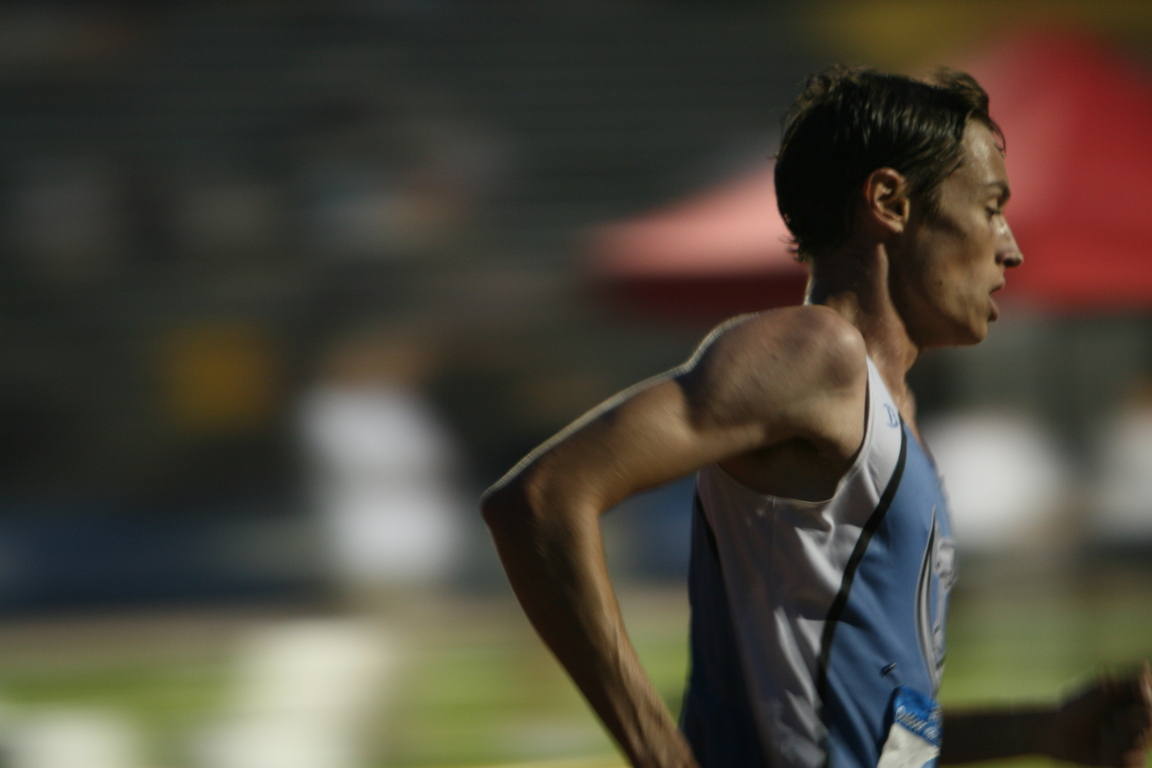
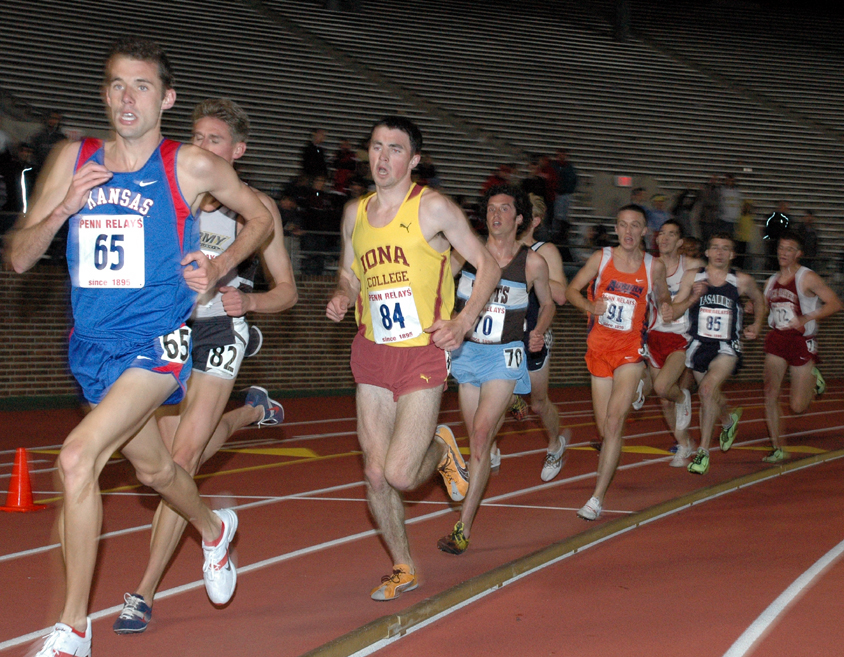
Jesse Faller competed in the 10k and 5k at this spring's NCAA Championships.

Jesse Faller competed in the 10k and 5k at this spring's NCAA Championships.

“Going into my last national was certainly a weird feeling, knowing that it would be simultaneously the culmination of a great year and the end of my running career at Tufts. It was hard to put it out of my mind that this would be the last time competing in a Tufts uniform. I kept thinking about what I was going to do without NCAA running – will I stay in shape after college without a team pushing me? will I stay sane without a daily dose of running? wait, I can do stuff on Saturdays now? am I forever going to be a six, seven, or eight time All American? Even with all the thoughts and all the pressure of this being my last nationals, I stayed surprisingly calm throughout the trip. Everyone has a different nationals experience based on the goals, expectations, and attitude they have before the meet. Most people say to just treat it like any other meet, and you’ll be the most successful. Personally I never found that advice very helpful, because good racing requires mental preparation, and nationals isn’t like every other meet. It’s all about being in the proper tension between calm and energized. Too calm, you might fall asleep and the race will go by you; too nervous and energized, you might hype yourself up and burn out. Going into the 10k I really focused on remaining as calm as possible; I knew that 25 laps was going to be plenty of time and I didn’t need to get the adrenaline going too quickly. Since this would be only my second 10k ever, I was getting pretty nervous about how I would perform, so I really had to distract myself from the race. After some visualization, I spent a lot of time sitting around reading, or watching TV, or watching Jared perform. By the time the race came around, I was only a tiny bit nervous – I was relaxed, excited, comfortable with the competitors, and smiling (probably the most out of all my nationals races). Maybe it’s just something about the 10k. After all, as you get shorter in distance, you’ve got to squeeze all 25 laps of competitiveness into shorter and shorter distances. Needless to say, I performed well and was happy with my performance. In my events, attitude makes all the difference towards the end result.

However, this mental preparation did not prepare me well for the 5k on Saturday. Before the race even started I was mentally defeated – I hated having the #1 time going in, I put a lot of pressure on myself because it was my last race, and I was pretty tired and beat up from the 10k just two days earlier. I tried to relax, but there were so many negative thoughts. The negative thoughts plagued me, especially when my legs felt significantly worse on Saturday than they did Friday. Even a relaxed attitude wouldn’t have helped me in a 5k. I know this is hard for some people to believe, but after running the 10k I’ve come to believe that the 5k is a fast race. Perhaps in the same way a 1500m runner thinks the 800m is a fast race. You have to get out near the front, the pace is relentless, it’s hard to pass people, there’s no time to relax, you always have to be on your toes (for me, that’s true literally). I wasn’t mentally prepared for this kind of race, and ultimately I had a sub-par performance.

At the national level, the stakes are pretty high and mental preparation is crucial, especially for distance runners. What I’ve found is that my attitude before the race is incredibly important, both for how the race will play out and how I will look at it in hindsight. It is interesting to see different athletes who thrive under the pressure and others who fold under it. Some athletes are happy no matter how well they placed, and some are seemingly never satisfied.

Anyways, those are just some short thoughts about race preparation and performance. As for the trip itself, this was a fun and enjoyable nationals. It was awesome to travel and compete with three seniors, to have friends and family at the meet to cheer us on, to finish our track careers in good style. Everything else was the same – same boring hotel experience, watching a lot of movies and sports (indoor track was march madness, outdoor was NBA playoffs), same boring banquet (except the evolution of dance guy), same old swag that I don’t know what to do with. I remember when it was all cool and exciting. But still, man am I going to miss these meets.”

Filed in National Championships | No responses yet
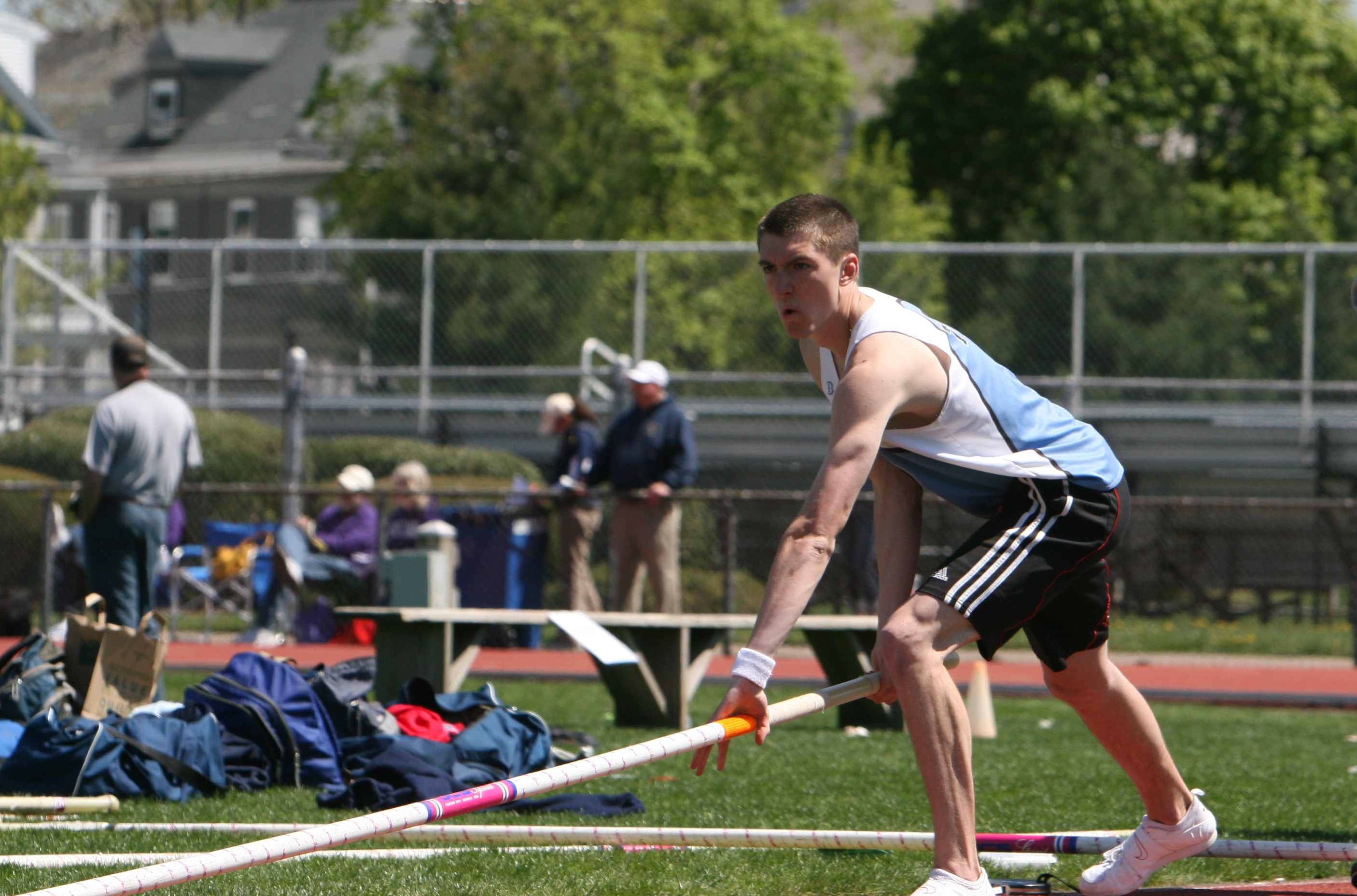
Good or bad role model?

Posted by on Thursday, May 20th, 2010

As a student, am I a good role model or a bad role model for the team? I’m now 4 classes deep into my new program, well 3.5 classes deep which is what prompts this question. I’ve yet to finish a class on time yet in the last two years. I’ve taken an incomplete in every one and then handed in my final paper late. On some level, I’m incredibly embarrassed by this, but on another, it makes me proud. Proud of the student I’ve become and proud to be a part of this program at Tufts.

Finals week isn’t just a time of final papers and exams. For me as a 30-year-old coach, finals week represents a whole litany of other stuff. In the winter, I’m finalizing our recruiting class, trying to buy xmas presents for the loved ones, and getting the team prepped for the new year. In the spring, finals week coincides with the NESCAC, DIII New England, and Open New England Championships. You can see how my class work may take a backseat to some of my other responsibilities.

Here’s my issue. I could definitely hand something in on time and finish the class, but it wouldn’t be something I was proud of. I’d rather take the incomplete and write something that was meaningful to me and didn’t waste my professors’ time. At my age, pumping out something that you’re not proud of just seems like a waste of time and that’s not something I’m interested in.

More importantly, I’m thankful that my professors are willing to be patient with my busy schedule and allow me to get them something of value. I can’t express enough how amazing this is. I love working at and being a part of a school that can see the goal of knowledge, learning, and wisdom through all the BS of grades and exams.

My class this past semester was 3 people. Well, 4 if you count the professor. We talked. It was great. There wasn’t a syllabus. No set structure or game plan going into the semester. Yet somehow I got so much out of the class just from our 3 hours of conversation each week. It helps to have a professor who knows so much about the field that he can go along with any topic, at any time, at a moment’s notice.

Long story short, I think that my focus on learning and quality is the #1 foundation for academia. Don’t do it for the grades. Other than the C that I got in English class in 11th grade, I couldn’t tell you exactly what my grades were. But I could definitely tell you all about the conversations we had in class this semester. Even still…you should probably try to get your papers in on time. You’ll get some leeway when you get to be my age.

Filed in My Approach to Sport,Random Stuff | No responses yet

Quick Thoughts

Posted by on Saturday, May 8th, 2010

Wow, this is a crazy life we track coaches live.  Thursday/Friday/Saturday meets on 4 of 5 weekends is a tough one.  I guess I bring it on myself by having decathletes.  Speaking of the decathlon, I realized yesterday exactly how much of a love-hate relationship I have with that event.  If anything is going to give me an ulcer, it’s going to be the decathlon.  The consistent stress of making first attempts in the HJ, LJ, and PV on top of getting your first SP and DT in, is enough to make me scream.  Add to that the chance that any of 10 hurdles could just jump up and bite you at any moment.  Sometimes I just want to go take a walk and clear my head.

In the end, it’s great practice for controlling your emotions.  You’re insides feel like they’re doing the equivalent of back flips, dry heaving, and screaming all at the same time.  Think about it.  That’s some serious stuff.  But on the outside, you have to have a face of calm, control, and togetherness.  It definitely wouldn’t help my guys if I was burying my head in the sand like an ostrich.  That’s probably why I cheer so much more in the decathlon than in other events.  I have to purge that energy as soon as they make a good height or put a good throw out there.

You also get to experience so many different coaching styles in the decathlon.  This weekend was the best example for me.  I won’t get into details, but there was definitely a full spectrum of coaching techniques at work this week.  Feel free to find me sometime, I’ll be more than happy to share a few stories with you.

Filed in My Approach to Sport,Random Stuff | No responses yet

No Regrets.

Posted by on Tuesday, April 27th, 2010

No regrets. That’s what it’s all about for me.  I realized this very early on.  My greatest regrets are things I never attempted, not my failed attempts. I probably realized this in 6th grade when I never asked out my crush, Jessie. Then Jason beat me to the punch. Who would have ever thought that they’d stay together all through all of junior high and high school and then get married. That taught me my second lesson, everything happens for a reason. (But that’s a whole other blog entry, this one’s about regrets.)

I’ve been coaching now for 8 years and I’ve always brought my meets home with me. Saturday night and Sunday are spent figuring out what went wrong, what adjustments can be made, how can we make them. How can we make a big step forward with the least amount of change? Eight years of this same routine. Not that this is a bad thing. I think it’s healthy to always want more.  Sometimes it’s as small as thinking I should have adjusted a HJ or LJ approach. Maybe I should have bought a different trail mix for the decathletes. Maybe we need to add a step to a 4×1 exchange. Or maybe we need to transition a 200 runner to the 800. I’ve always woken up on Sunday with some of my first thoughts being geared towards how Saturday’s meet could have been better. Until this Sunday.

Sure we could have done better. Sure, we can do better. Yes, we will do better. We can go faster, higher, stronger, but that isn’t what I’m trying to say. Regrets are about knowing that you left everything at the track on that day and couldn’t have done anything more on that Saturday. I fully felt that way about our effort on Saturday. From the cheering fans, teammates, and friends to the coaches and athletes. I couldn’t have asked for more from this team. They gave everything they had in every aspect of the meet.

Was I worried at some points that we’d lose our energy? Definitely. A track meet is more like a marathon than anything else. We definitely got out of the blocks well thanks to the 10k and long jumpers.   Then we held pace in the middle in every event. But still, just as in the marathon, you can run 20 great miles just to see it blow up in the last 6. Not this team. Not this Saturday. The focus was intent. Each athlete saw their role in keeping the momentum rolling. The energy was palpable.  And they kept it all the way through to the finish.

Thanks for everything this weekend guys. Now let’s run it back and do it again next week, next season, next year.

But, now to the most important part of this blog post. And that’s Jessie from 6th grade. Is that the most important part? Yeah, but it really has nothing to do with Jessie per se. It’s the fact that I learned from that mistake and I didn’t make it again. When the most amazing woman in the world walked across my path 7 years ago, I didn’t let her go. I married her. I don’t think I’d be half the man I am without her. And I definitely wouldn’t enjoy my life half as much. Thanks for everything Marion.

Filed in DIII NE XC / T & F,My Approach to Sport,Random Stuff,Uncategorized | No responses yet

Lacey’s 1st Boston Marathon

Posted by on Friday, April 23rd, 2010

A mere 72 hours after Jesse Faller broke his 5k school record, Tufts alum Matt Lacey dominated his expectations in his first ever Boston Marathon.  Lacey still maintains a stronghold on the Tufts 10k record with his impressive performance of 30:04.  He is easily one of the most selfless athletes that I’ve ever had the pleasure to work with.  Pair that up with his tenacious racing style and his never-ending quest for perfection, and you can see how sad I was to see him go.

Hey Ethan,

As I’m sure you saw the marathon went way better than expected. I ran a very even pace throughout, and felt really good up through the 21 mile mark. The last 5 miles were tough, but mostly because my quads hurt, and I was afraid they were going to cramp up at any moment. I fueled and hydrated very well and ran relaxed. Going back to the first week in March when my knee started hurting my weekly mileage was: 18, 26, 35, 32, 42, 55, 40, so honestly I wasn’t even thinking about breaking 2:30, but the first 5, and then 10 miles felt easy, so I kept going, waiting for the other shoe to drop, and it never did.

The real reason that I’m writing is to say that all the Tufts support I heard during the race was fantastic. Wearing the brown top was a great decision, I never went longer than 3 minutes without hearing “Go Tufts” the whole race, and beyond hearing the team going crazy at the end, I saw alumni out at the old spot on heartbreak hill, as well as TUXCTF alumni at other points on the course (and there were probably more I didn’t see).  I just wanted to say that I couldn’t have been more proud to be a Jumbo, and best of luck hosting NESCACs this weekend.

Lacey

Yes, this guy ran 14:19 and 30:04.

Yes, this guy ran 14:19 and 30:04.

Filed in Uncategorized | One response so far

Learn something about yourself.

Posted by on Friday, April 9th, 2010

Some people say that you learn something new everyday.  I’m not sure if that is 100% true, but I think you should strive for it.  If not, life gets boring.  You lose sight of that when you’re in school getting information crammed down your throat around every corner.  Maybe we should do less time trying to force-feed students their education and doing more to make them lifelong learners.  If you take care of the first then everything should take care of itself.

This thought comes from two main things.  One, it’s 6AM and my brain hasn’t fully warmed up yet.  And two, I just posted a new blog on a website partly run by a former Tufts runner.  Mike Don helps run the Athletes Honey Milk website.  Here’s the post.  As a result, I’m excited to learn two new things today.

1. Sometimes our greatest strength is also our greatest weakness.  That same drive that pushes a runner to be great can also be the same drive that pushes him over the limit.  It’s a fine line between motivated and over-motivated.  It’s one that get’s blurred from time to time.  I love working with motivated runners, but there are times when it is even more challenging.  The concept of “less is more” in training is a tough one to get through.  Some people just feel like they need to be doing something hard everyday in order to feel bigger, faster, stronger, more fit.

2. Sometimes it’s important to focus on the positive and not the negative.  As I step back and read my post on Athletes Honey Milk, I realize that I focused more on the negative aspect of motivation.  I should be happy that our athletes are always looking for the next step to make themselves better.  And trust me, I am grateful of that fact.  Sometimes coaching seems to be a whirlwind of constantly changing what you’re saying.  You could have a conversation with one athlete where they need to work harder and do more.  Then immediately turn around and have a conversation with another athlete about doing a little less and resting more.

It definitely keeps the days fresh and interesting though.

Filed in My Approach to Sport | No responses yet

Faller at Nationals (posted by Mark Coogan)

Posted by on Sunday, March 21st, 2010

It is difficult to anticipate how a 5000 meter race will be run at a championship meet.  You never know how it is going to be run, you must be ready for any kind of scenario. Will someone take the pace out quickly and try to burn off the kickers and the individuals who are doubling back from another event? Will the race be a sit and kick event? The problem with taking the race out hard is the fact that early leaders typically loose.  On the other hand a slow pace will allow the entire field to have an opportunity of winning the race.

As the distance coach at Tufts this year I wanted a tactical race. We had Jesse Faller coming back from the DMR and an early season achilles injury.  I believed Jesse was the best miler in the field and we were hoping for an improvement on his 4th place finish from last year. As it turned out the pace was slow for the first two miles and Jesse was able to sit and stay relaxed.  You could see anxiety on the faces of the competitors. With 1000 meters to go the paced dramatically increased and the field quickly disintegrated as two runner got away. Faller was able to stay mentally tough and use his sub 4:10 miler speed to close the last lap in 29 seconds to secure 3rd place and All-American honors. The race set up very nicely for Jesse even though you never know how a championship 5,000 race will run.

Filed in Uncategorized | No responses yet

Fun with Relays (posted by Mark Carberry)

Posted by on Monday, March 15th, 2010

Since coming to Tufts, I’ve been extremely fortunate to be a part of some fast relays. It’s one of our calling card at major invites. In the past six years, we’ve had five DMR teams qualify for the NCAA Championships (one automatically), a 4×400, and reset our school record in the 4×800 and DMR this year. Over these years, we’ve been blessed with some talented athletes ranging from short sprints up through 10K but, although this may sound counterintuitive, it takes more than just fast runners to run a good relay team.

So, what is it, Mark? Is it practicing handoffs everyday? Is it working collectively with your four relay legs more often? Are there ways to train specifically for relay races? In this coach’s opinion, the answer to these questions are….well….maybe. With all matters track & field, I believe there’s a “science” and an “art” to the relay race. The scientific aspect is well documented and I’ll spare you the details of biomechanical gait analysis for long sprinters and middle distance runners here. Rather, I’d like to focus on the “art” of developing a national caliber relay squad.

2010 School Record 4x800 Team - 7:42 (Hanrhan, Marvel, Coach Carberry, Hale, Kirschner)

I believe, above all else, there’s got to be trust among all four relays legs. I won’t guarantee your relay team won’t be successful without everyone being best friends but it’s certainly an element that shouldn’t be missing. Trust can be commonly formed through experience. The job of a coach can be made very easy when you have a limited number of possible relay legs. Many high school programs only have four reasonable legs for a relay. This can be quite a blessing when those four guys or girls can get season after season of experience passing the baton along to each other. With experience comes trust and trust builds a stronger team. Having too many possible legs and testing too many relay squads doesn’t forge these relationships. Think twice before putting a four person squad together that has a hard time getting along.

Another vital part to building a relay team is acknowledging your team’s weaknesses. A distance medley team has a prescribed order (1200-400-800-1600) on the collegiate level but there isn’t a simple way to slot for these spots. A solid middle distance leg might garner his strength through speed endurance, making him a more legitimate 400m/600m/800m runner. Moving that runner to the 1200 spot on your DMR might be exploiting their weakness (endurance base). Rather, an above average miler might be a perfect candidate for a 1200 leg if they have more of a base mileage and strength backgrounds. The coach needs to put egos aside and be willing to limit weaknesses in as many legs as possible.

Finally, the least important – although necessary – aspect to a relay team is organizing the order. For 4×4’s and 4×8’s, the old adage states: put a veteran leader on leadoff, your weakest leg second, someone who can make up ground on third, and an experienced closer on anchor. As a profession, coaches need to break themselves of this mold. I once heard of a high school coach who made a younger brother always hand off to his older brother. There’s an “art” to this or maybe the little brother was just too scared to ever drop the baton! Be knowledgeable about who else is in your race, what you believe your legs are capable of running, and where you think you’ll be handing off on every leg.

Filed in Uncategorized | No responses yet

Friday-Saturday Meets

Posted by on Friday, February 12th, 2010

Each of the next five meets will be a Friday/Saturday combo meets for us.  Valentines Invite, DIII NE’s, Open NE’s, ECAC’s, NCAA’s.  I’ve never actually noticed it before, but it really puts the screws to your work week.  You find yourself losing the better part of a full work day with a meet on Friday.  It really makes the week pretty hectic because I still try to cram a full work week into the 4 day week.

To be honest, I didn’t even know that Monday was Presidents Day until someone told me today.  The job of a coach or an athlete doesn’t really pay attention to national holidays.  If you’re supposed to workout on Monday, it doesn’t matter how many presidents we want to celebrate or how many Auto sales there are…you’re going to workout.  Tufts had a snow day the other day (really shouldn’t have by the way), but no one even considered canceling practice.  Worst case scenario, you just strap on the snowshoes and make your way to the track.

I won’t lie.  I love the Friday/Saturday meets.  Everything in life has it’s costs and benefits.  The costs are that I have to up my productivity a bit for the next month or so.  I have to do 5 days worth of work in 4 days.  However, the benefits are that we get to throw down some serious performances.  The guys are ready to go and they’re excited to put together something special.  The competition starts to ramp up and everyone steps up the challenge at hand.

Thursday nights become the calm before the storm.  You never know where the excitement will come from, you just know that something is coming around the corner.  Who’s going to pop off a great performance and take it to the next level?  Everyone has the potential.  Who is going to put the pieces together this weekend?

Well, it’s 2:30 on Friday afternoon…let the games begin.

Filed in Uncategorized | No responses yet

Terrier Invite Dreams…er, Entries.

Posted by on Thursday, January 28th, 2010

With another season of 12-hour track meets at BU upon us, allow me to be the first to start up the conversation about entries.  I’m always intrigued by coaches interpretations of what their athletes are capable of and how they rationalize their entries.  As I’ve said in previous posts, I am all for more transparency in the entry system.  (That has a different ring though after last night’s State of the Union.)  I feel that coaches will be less likely to fib their entry times if their decisions are posted across the internet and at the meet.

This weekend, we’ll be a slightly split squad as 5 Jumbos head over to BU to race while the rest of the team heads up to Bowdoin for one of the more competitive quad meets in the region.  I love the extreme dichotomy between these two meets from an entry standpoint.  They couldn’t be more different.

At the Terrier Invite, it’s always a question of how to get your athletes in the heat that’s right for them.  I don’t want my 14:50, 5k runner in a heat with a bunch of 14:30 guys, but I also don’t want him in a heat with a bunch of 15:20 guys.  When there are 15:20 guys entered at 14:40 and 14:30 guys entered at 14:00, you can see the dilemma.  What to do?  What to do?

This year, I went straight by the Purdy Tables.  They have a place, but I rarely put any stock in them.  I even used the tables for their current season best performance, not their lifetime PR.  It seemed like the common sense thing to do.  We’ll see how it works out.

As for Bowdoin, we enter our athletes, and then on Saturday the coaches get together and call each other out.  We all know each other’s athletes enough to know who should be in the hot heat of the 400m or 800m, so why not just sit down and make it right.  I love this process.  It really puts the common sense back into meet management.  Obviously it isn’t possible for bigger meets, but it works great for something the size of the Bowdoin Invite.

Filed in Uncategorized | No responses yet

« Newer Entries - Older Entries »